Parlor Palm: A Timeless Houseplant for Real Life Spaces
Some plants demand attention. Others earn devotion by learning how to live well with what they’re given.
The Parlor Palm, botanically known as Chamaedorea elegans, belongs to the second group.
Graceful, adaptable and quietly resilient, this palm has been grown indoors for more than a century. It doesn’t dominate space or demand perfection, simply because it understands something fundamental about survival: adaptation is its strength.
In this post, we’ll explore the Parlor Palm’s history, care and origins. Also, why its story mirrors the experience of so many of us navigating real life spaces with limited light, limited resources and a deep capacity to grow anyway.
Common Names & Botanical Background
SCIENTIFIC NAME: Chamaedorea elegans
FAMILY: Arecaceae (Palm family)
Common names include:
- Parlor Palm
- Neanthe Bella Palm
- Bella Palm
- Good Luck Palm
- Dwarf Palm
The genus Chamaedorea includes over 100 species, many adapted to life beneath taller trees. Chamaedorea elegans stands out not for its size, but for its flexibility, a trait that defines both its botanical success and its emotional resonance.
Native Range & the Power of the Understory
Parlor Palm is native to southern Mexico and Guatemala, where it grows naturally as an understory plant in tropical forests.
In these environments:
- sunlight is filtered and consistent
- competition for light is constant
- survival depends on efficiency, not excess
According to university extension references and botanical collections, this understory origin is what allows Parlor Palm to tolerate conditions that would stress many other palms.
And here’s where the lesson lives.
In the forest, Parlor Palm doesn’t “fight” for light the way canopy trees do. It doesn’t stretch itself thin trying to become something it isn’t. Instead, it learns how to use what light reaches it, adapting its growth, leaf structure and pace to thrive beneath others.
What might appear to be a limitation, reduced light, becomes an advantage.
Because of this adaptation, Parlor Palm can move into environments that other palms cannot. Bright interiors, shaded rooms, hallways and offices; places where sun-loving plants fail, Parlor Palm succeeds.
The very condition that could be framed as a disadvantage becomes its mobility, its resilience, its quiet strength.
From Victorian Parlors to Modern Homes
Parlor Palm rose to prominence during the Victorian era, when it symbolized refinement, composure and restraint. It was displayed in sitting rooms and parlors, spaces meant for reflection, conversation and calm.
Unlike many fashionable plants of the time, Parlor Palm endured.
Why?
Because it wasn’t built for spectacle.
It was built for life indoors.
Its understory wisdom translated seamlessly into homes, apartments and workplaces, environments with filtered light, fluctuating temperatures and human rhythms.
Why Parlor Palm Works So Well Indoors
1. Elegant, Classic Tropical Form
Its arching fronds bring softness and movement without overpowering a room. The plant doesn’t shout. It settles in.
2. Highly Adaptable Light Tolerance
Parlor Palm thrives in:
- low light
- low to medium indirect light
- medium indirect light near windows
Direct sun can scorch it, but that’s not a weakness. It’s simply a reminder that this plant was never meant to live on display at the top. It was designed to grow well where others overlook.
3. Forgiving Water Needs
It prefers evenly moist soil but tolerates brief dryness better than overwatering. Like many of us, it does best with consistency, not intensity.
4. Subtle Indoor Environmental Benefits
It adds humidity, softens air, and brings life into still spaces — not dramatically, but steadily.
Size, Growth Rate & Placement
Indoors, Parlor Palm typically reaches 2–6 feet tall, growing slowly and gracefully. It fits into bedrooms, hallways, entryways, and studios without demanding attention.
It fills space without competing for it.
Care Guide
Light: Bright to low indirect light
Water: Allow top 1–2 inches of soil to dry between watering
Soil: Well-draining indoor mix
Temperature: 65–80°F
Feeding: Light feeding during spring and summer
Zone 7b: Moving Between Worlds
For gardeners in USDA Zone 7b, Parlor Palm can be grown indoors year-round, with optional outdoor time.
- Move outdoors after frost danger passes
- Place in full shade or dappled shade
- Bring back inside before temps drop below 55°F
Again, notice the pattern: Parlor Palm doesn’t chase extremes. It transitions smoothly between environments because it learned early how to live with less.
A Living Reflection
There’s something deeply affirming about a plant that doesn’t measure success by dominance or brightness.
Parlor Palm teaches us that:
- not everyone is meant for the canopy
- filtered light is still light
- adaptation can become freedom
The very thing that might make one appear “small” in one environment can make them exceptionally capable in another.
A Recent Project
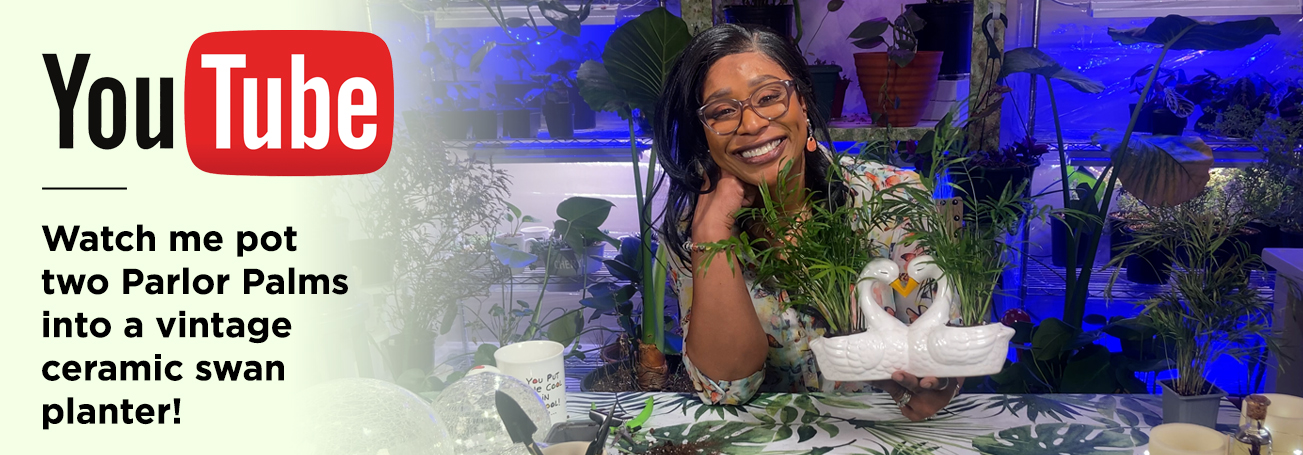
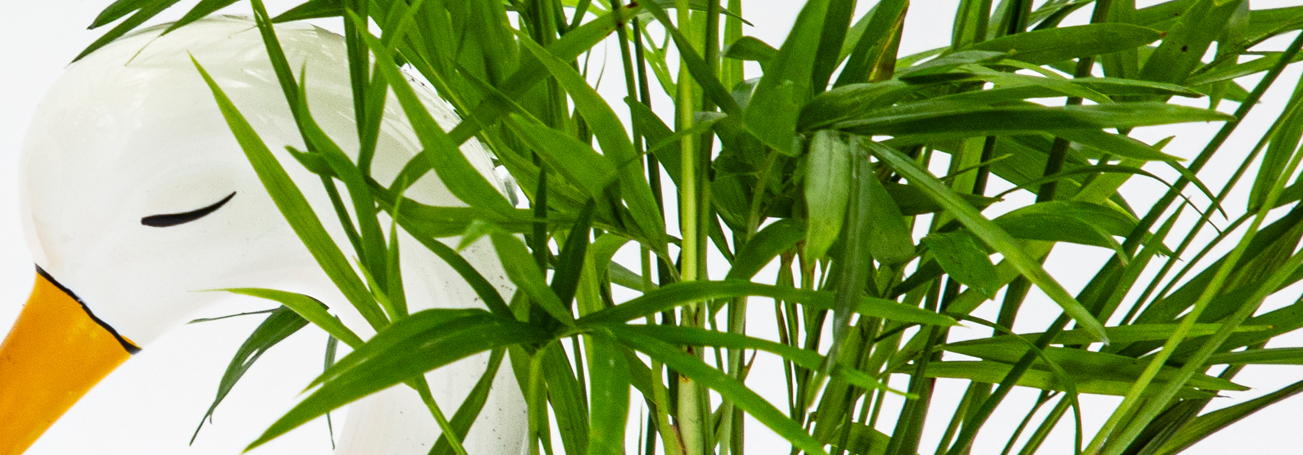
I recently potted two Parlor Palms into a charming, vintage-style ceramic double swan planter; a quiet, sculptural piece that mirrors the plant’s grace. The video documenting that process is above.
The exact planter with Parlor Palms featured in the video is available in our shop.
Unpotted Parlor Palms are also available if you’d like to style your own.
Closing Thought
Parlor Palm doesn’t rush.
It doesn’t compete.
It doesn’t demand more than it needs.
It learned how to live well with what reached it: filtered light, quiet space and time. And in doing so, it became adaptable enough to move through places other plants simply cannot.
That story resonates with me deeply.
As someone who has spent much of life growing in the understory, learning, observing and adapting, I recognize this plant not just as something beautiful, but as something familiar. It reflects a way of being that values resilience over recognition, presence over performance and steady growth over spectacle.
It simply grows beautifully wherever it’s planted.
And that might be why it feels so familiar to me.
Find this insightful? Share this!
Related Post
Subscribe Our Newsletter
Lorem ipsum dolor sit amet, consectetur.