
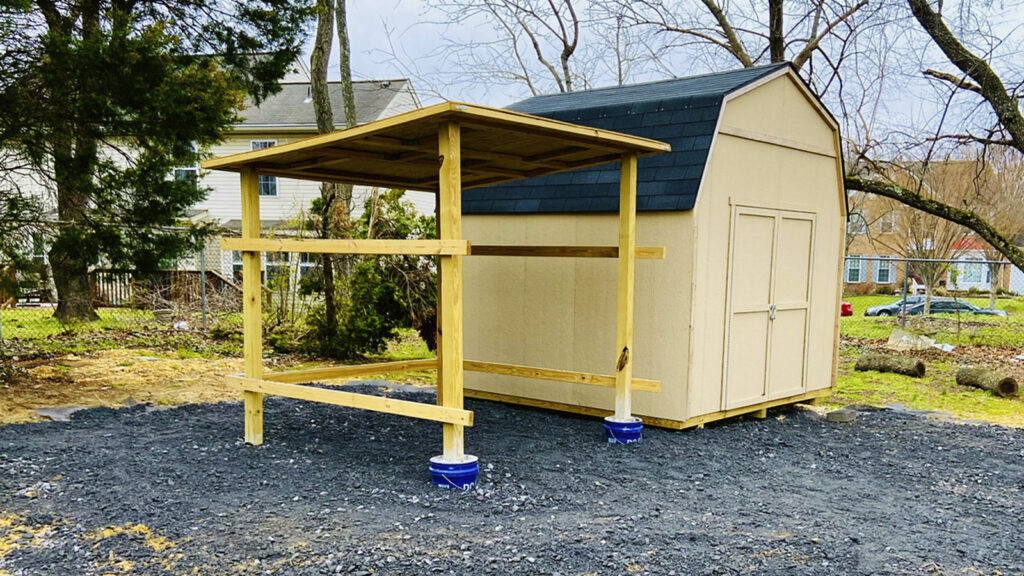

Building a Strong Shed Foundation With Aggregates
When you’re building a shed or tackling a major landscape project, the foundation makes all the difference. After a decade of working the land at 40 Day Living Urban Farm, we’ve learned that stability, drainage and cost-efficiency start from the ground up.
So when it was time to install our new shed, we created a base that was:
- Strong
- Well-drained
- Level
- Cost-effective
- Doable for the average homeowner
We did this using 2–4” River Rock, Fine Mason Sand and CR-6 — all sourced right here in Southern Maryland from two excellent local suppliers.
This post breaks down exactly what we used, why it works, how we installed it and how you can save real money by buying smart.
Why Aggregates Matter in Landscaping & Shed Bases
Aggregates (rock, gravel, sand and crushed stone) are more than just filler — they form the structural backbone of your landscape. The right combination helps:
- Improve drainage
- Prevent sinking or shifting
- Support heavy structures
- Maintain level surfaces over time
- Reduce moisture problems
- Extend the life of sheds, patios, walkways, greenhouses, etc.
In our application, a firm foundation base means our shed stays strong for years.
What We Used (and Why These Three Work So Well Together)
1. 2–4” River Rock (Drainage Layer)
Purchased from: ReAgg in Temple Hills, MD
This larger stone creates the first drainage layer. Water flows freely through it instead of sitting beneath your shed, which prevents wood rot, settling and muddy areas.
2. Fine Mason Sand (Golden-Tan Coarse Sand)
Purchased from: T.E. Wood Farm, Clinton, MD
Concrete sand — also called sharp sand — is gritty, angular, and perfect for:
- Filling in the gaps between river rock
- Creating a leveling cushion
- Reducing movement
- Locking layers together under pressure
The golden-tan color makes it easy to identify.
3. CR-6 (Crusher Run / Crush & Run / Grade 6 Stone)
Also purchased from: T.E. Wood Farm, Clinton, MD
CR-6 is a compactable blend of:
- Stone dust
- Crushed gravel
- Crushed rock
It compacts extremely well and forms a strong, rigid surface — ideal for sheds, patios, greenhouses and walkways.
Our Exact Installation Process (Simple & Extremely Effective)
This is exactly how we built our shed base:
Step 1 — Prep the Ground & Remove Unsafe Limbs
Before laying any aggregates, we made sure the entire area was safe and clean:
- Cleared grass, weeds and debris
- Knocked down high spots to level the ground
- Checked nearby trees for weak, cracked, or leaning limbs
- Cut down any branches or small trees that looked like they could fall during storms
This gave us:
- A safer work environment
- A protected shed installation zone
- Long-term peace of mind
Step 2 — Add the 2–4” River Rock
This forms the drainage base. It allows water to move through the foundation instead of pooling beneath the structure.
Step 3 — Spread Fine Mason Sand Over the River Rock
This step is extremely important. The concrete sand:
- Filled the gaps between the large stones
- Created a smoother, more even setting bed
- Packed tightly under pressure
- Helped prevent shifting later
Step 4 — Top Everything With CR-6
The final layer of CR-6 creates a strong, compacted surface. Once spread and tamped down, it formed a solid, level foundation ready for shed installation. The result:
- No shifting
- No sinking
- No soft spots
- Excellent drainage
- Long-term stability
Exactly what you want for a shed base.
Where We Bought Our Materials (Southern Maryland Residents — Save This!)
2-4″ River Rock – ReAgg
4763 Clifton Road, Temple Hills, MD 20748
Why we recommend them:
- Fast loading
- Great selection of rocks to choose from
- Very fair and reasonable prices
- Reliable bulk supply
- Ideal for trucks and trailers
Fine Mason Sand and CR-6 – T.E. Wood Farm
8647 Dangerfield Place, Clinton, MD 20735
Why we recommend them:
- Knowledgeable staff, excellent for asking questions
- High-quality materials
- Consistent products
- Simple load/pickup process
These two suppliers helped us save significantly on this project.
How We Saved Money (A LOT More Than You Think)
Bagged gravel and sand from Lowe’s or Home Depot are convenient — but extremely expensive per pound.
By purchasing from local suppliers:
- We paid way less per ton
- Got better-quality materials
- Saved our landfills from dozens of heavy plastic bags
- Finished the job faster
- Supported local Maryland businesses
It was a win-win for everyone! If you have a truck, trailer, or access to one, you can save hundreds — sometimes thousands — by going directly to the source.
Final Thoughts: Strong Foundations Mean Greater Return on Your Investment
Whether you’re installing a shed, greenhouse, walkway, or patio, the base determines how long your investment will last. Using river rock, concrete sand, and CR-6 gave us a shed foundation that is:
- Stable
- Level
- Well-drained
- Long-lasting
- Budget-friendly
This method is one of the most reliable ways to build a sturdy foundation without hiring a contractor.
For Southern Maryland residents, Re-Agg and T.E. Wood Farm are two excellent sources you can trust for bulk aggregates.
If you’re planning a shed build or landscape project, this simple 3-layer foundation can save you money and give you long-term results.
Find this insightful? Share this!
Related Post
Ten Years Without My father It’s hard to admit that it’s been ten years since my father passed away. I still can’t quite believe…
Some days don’t start with clarity or confidence, they start with a weight. A lump in the throat, a tightness in the chest, a…
Subscribe Our Newsletter
Lorem ipsum dolor sit amet, consectetur.